This is the first article in our Stop Wasting Your AI Investments series, where we explore why AI initiatives fail, what most organizations get wrong, and how to build the capability needed to turn AI investments into business outcomes.
AI is not failing because the technology is weak. In most organizations, AI is failing because the business is not set up to turn experiments into measurable outcomes.
The Hidden Cost of AI Excitement
AI initiatives usually begin with energy. There is leadership interest. Teams are motivated. Budgets appear. Vendors promise acceleration. Internal champions start building. It feels like momentum. But somewhere between the first experiment and real business use, things start to break down.
What looked like momentum becomes another expensive learning exercise.
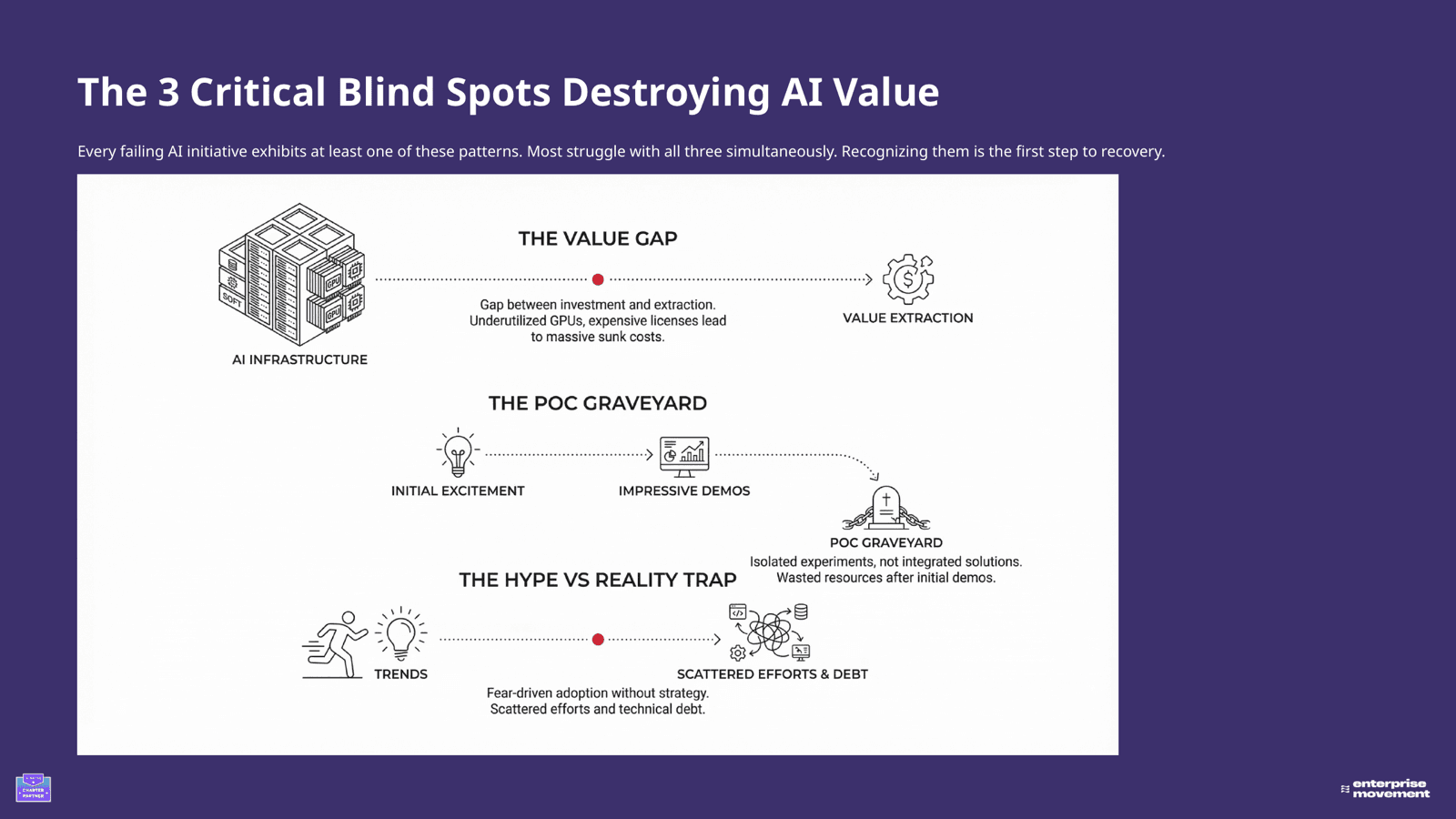
The Three Blind Spots That Destroy AI Value
1. The Value Gap
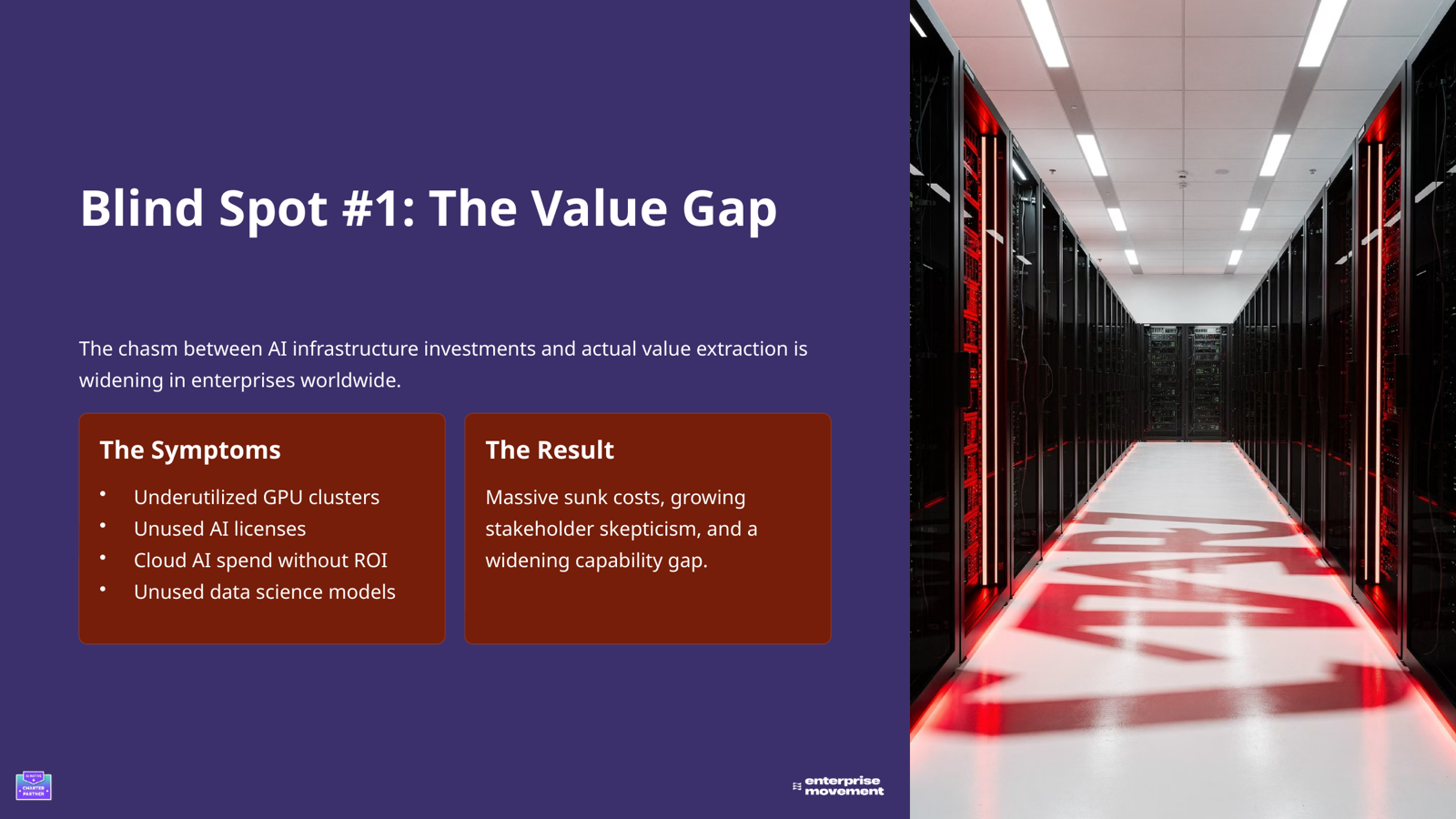
Organizations buy GPU capacity, platforms, licenses, cloud services, and consulting support. Teams create prototypes. New capabilities are announced internally. But measurable value remains unclear. The symptoms are easy to recognize: underused infrastructure, unused licenses, cloud spend with no defensible ROI, and models that work in demos but never become part of daily operations.
2. The POC Graveyard
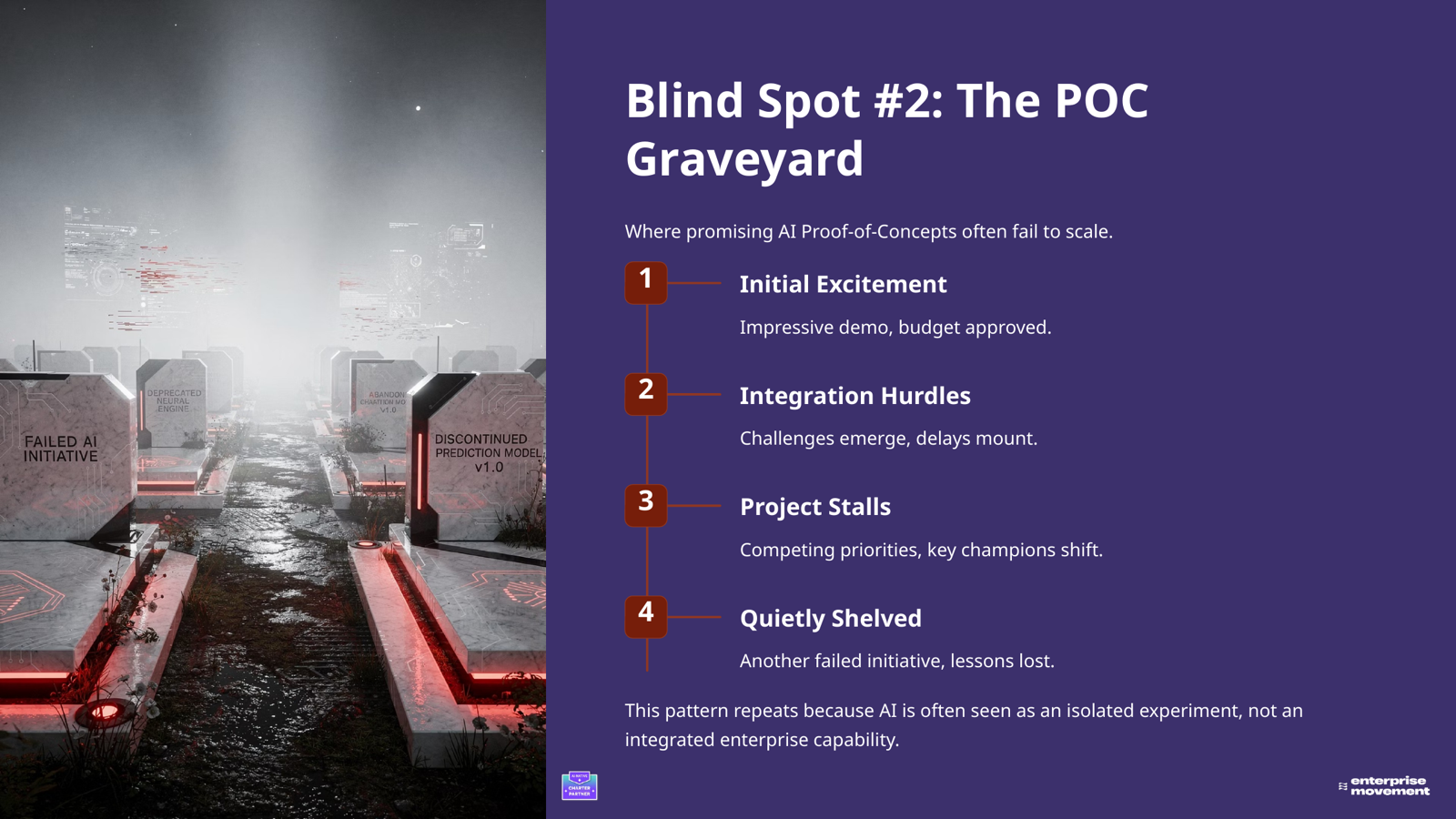
A team creates a promising demo. Stakeholders get excited. Budget is discussed. Expectations rise. Then reality enters the picture. Integration becomes difficult. Ownership is unclear. Production requirements were never defined. A sponsor changes role. Priorities shift. The initiative quietly loses momentum and disappears.
3. The Hype vs. Reality Trap
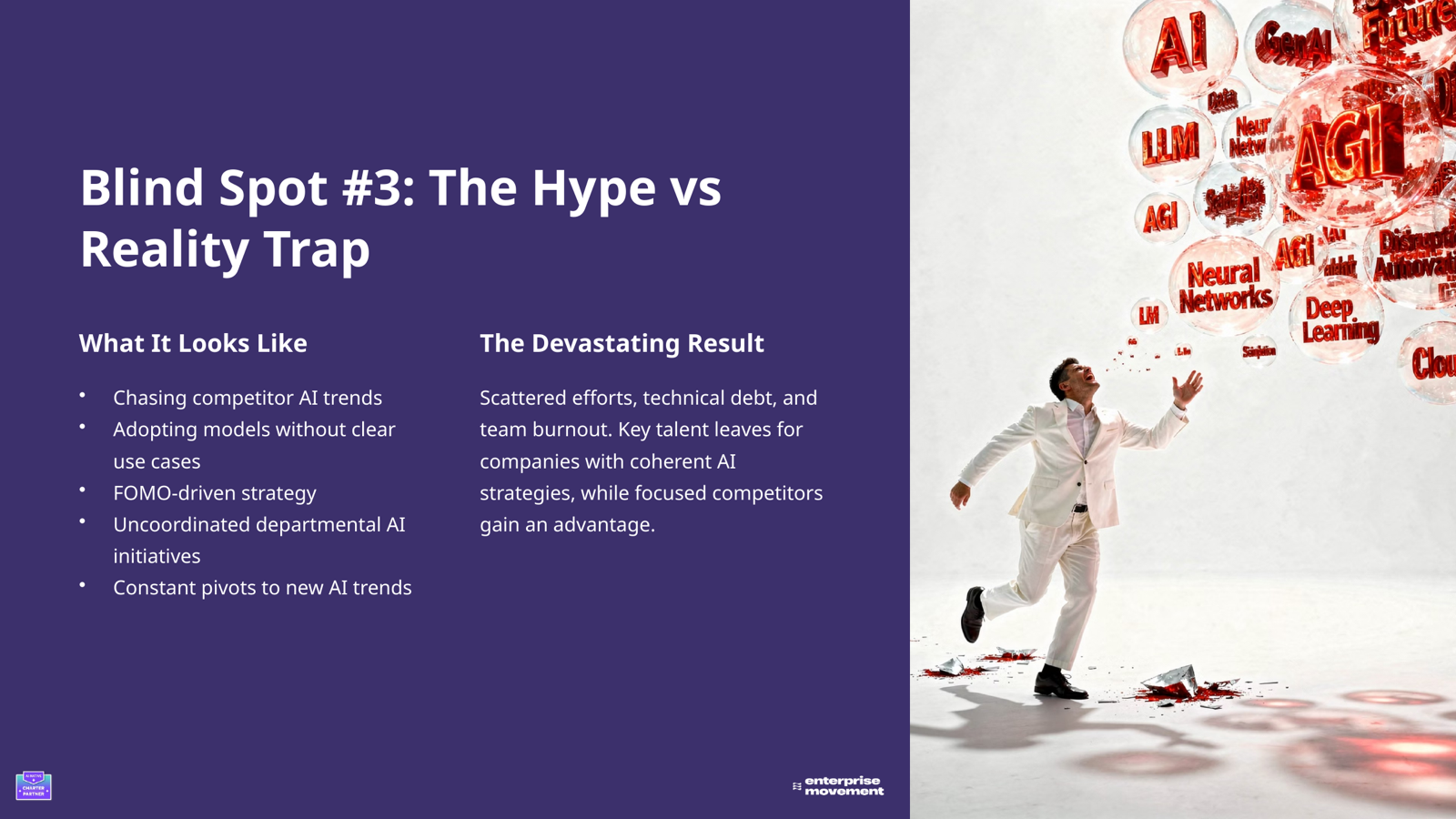
Organizations chase the latest model trend. Leaders respond to competitor pressure. Teams launch disconnected AI efforts across departments. Use cases are shaped by what is fashionable rather than what is valuable. The result is predictable: scattered investments, weak prioritization, technical debt, team fatigue, and very little compounding learning.
Why This Matters Now
These blind spots do more than waste money. They reduce trust. They create skepticism at the leadership level. They burn out strong technical people. They make the next AI initiative harder to fund and harder to believe in.
AI is not failing because the technology is weak. It is failing because the organization is not set up to turn AI investments into business outcomes.
Series: Stop Wasting Your AI Investments